Dining
The Twelve-Seat Room
Why the most ambitious chefs in the country are shrinking their dining rooms on purpose.
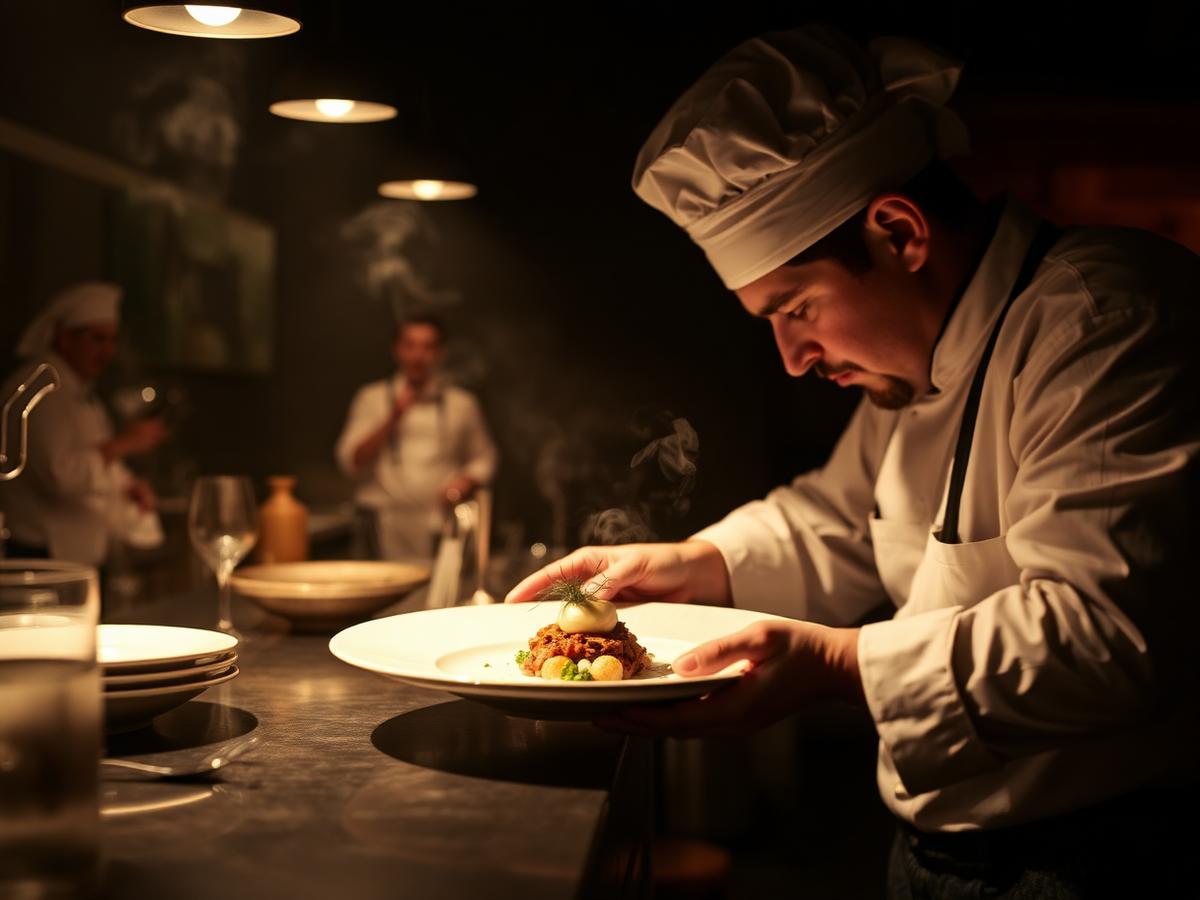
A twelve-seat counter is not a business model. It is an argument about attention — and it is being made, right now, by some of the most capable cooks of their generation.
The reasoning is not romantic. A large dining room requires a brigade, a brigade requires systems, and systems require dishes that survive being executed by someone other than the person who designed them. Shrink the room to twelve and the chef can cook every plate personally, change the menu on a Tuesday because the fish is better, and speak to every guest without a microphone.
The economics only work when every element — sourcing, staffing, the wine list, the lease — is bent toward the same idea. We asked four chefs to open their books, and their reasoning turned out to be remarkably consistent.
Food cost is higher, often dramatically: buying a whole animal or a single crate of something exceptional makes no sense across ninety covers and perfect sense across twelve. Labour cost is far lower, because there is no brigade. Rent is the variable that decides everything — the model dies in a prime-street location and thrives one street back, which is why so many of these rooms are in places you would never walk past.
Waste falls close to zero, and that is not a marketing line. With a fixed number of guests, a fixed sitting and a menu written the same morning, the kitchen buys precisely what it will use. Two of the four chefs described this as the single biggest quality improvement in their cooking, not the biggest saving.
The wine programmes have changed shape accordingly. Nobody is carrying a thousand references for twelve seats. Instead: a short, opinionated list, a lot of half bottles and by-the-glass pours from bottles the sommelier actually wants to open, and a willingness to pour something from the cellar that was never on any list because it fits the fourth course.
Service is where the format is most misunderstood. A counter is not automatically intimate; badly run, it is a performance the guest cannot leave. The rooms that work have solved this by reading the table — talking to those who want to talk, retreating for those who came to eat, and keeping the pacing tight enough that two and a half hours never becomes four.
Booking remains the format's unsolved problem. Twelve seats, five nights, means sixty covers a week against demand measured in thousands. The chefs we spoke to have landed on variations of the same answer: monthly releases, a waiting list they actually work through, and a deposit that makes no-shows someone else's habit.
There is a risk the movement is already being copied badly. A small room is only an advantage if the cooking justifies the proximity; at twelve seats every weakness is served at eye level. The counters that will still be here in five years are the ones where the chef would rather cook less than cook worse.
That, finally, is the argument. Not exclusivity, not theatre, not scarcity as a pricing device — simply the oldest idea in restaurants, which is that food is better when the person who made it is standing in front of you.