Travel
The Sleeper Train Returns, and It Is Not Nostalgia
New night services across the Alps have made the overnight train a genuine alternative to the short-haul flight — and the cabins have finally caught up.
The romance of the night train has been invoked so often that it has become difficult to say anything useful about it. So let us start with the unromantic part: on a growing number of European city pairs, the sleeper is now the fastest door-to-door option once you count the airport.
That is the argument that has revived the format. A 9pm departure from a central station and a 7am arrival in another city centre replaces a hotel night, an early alarm, a taxi, a terminal and a taxi. For anyone whose time is the constraint, the maths has quietly flipped.
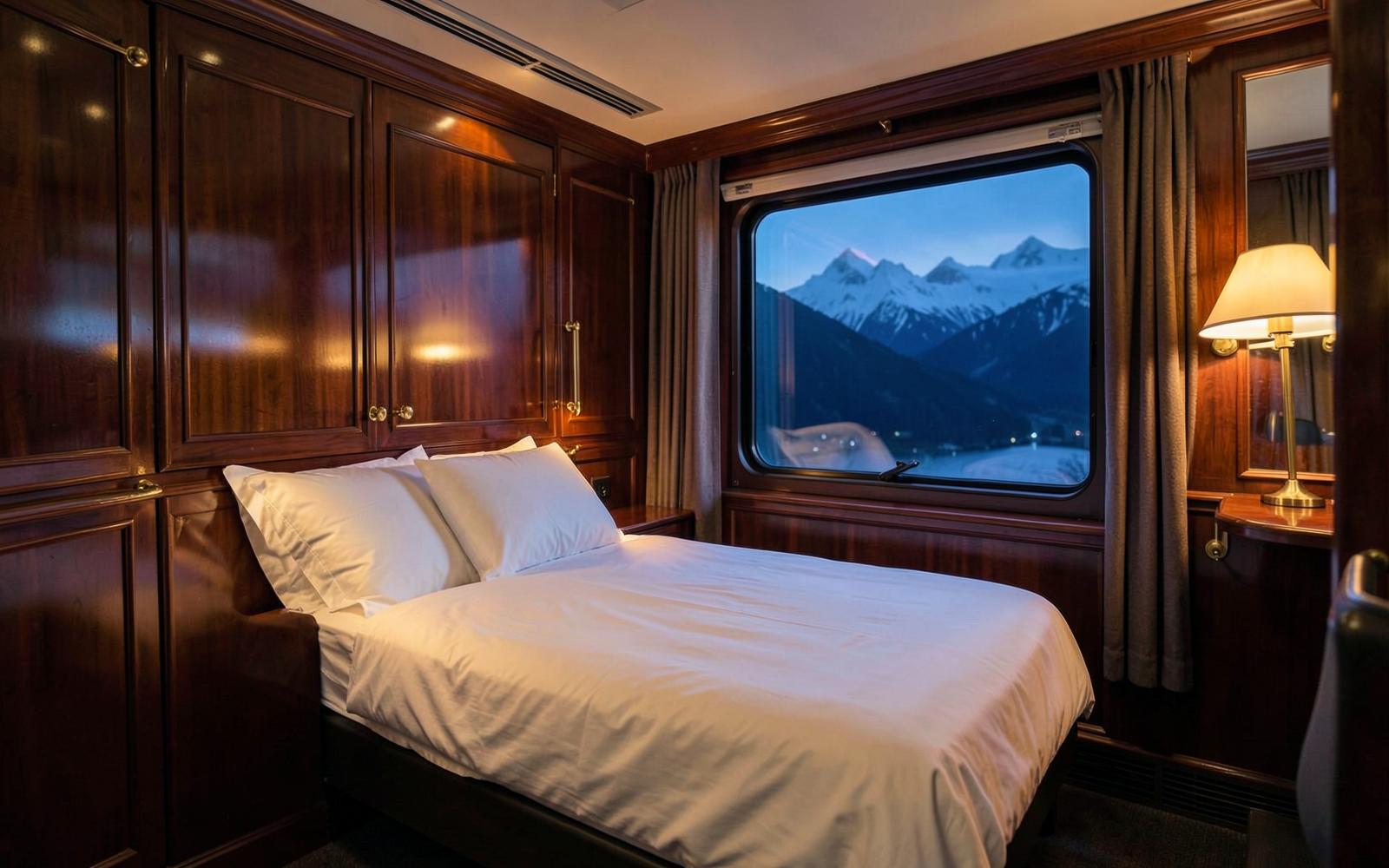
The new rolling stock is what makes it liveable. The current generation of private cabins is a genuine room: a proper bed rather than a bunk, an en-suite shower in the top tier, decent sound insulation, adjustable lighting, and — crucially — a door that locks and a window you can lie down and watch.
Service has been rethought too. Dinner served in the cabin rather than a crowded diner. A short, well-chosen wine list. Breakfast timed to the arrival rather than the timetable. The best operators have understood that the product is sleep, and everything else is in service of it.
The Alpine routes are the ones to try first. Crossing the mountains at dawn from a bed, with coffee, is one of the few travel experiences that consistently exceeds its own marketing, and the corridor connects a genuinely useful set of cities for business as well as holiday travel.
Practical advice, learned the hard way. Book the private cabin at the far end of the carriage, away from the vestibule door. Take the second-highest category rather than the highest; the difference is often a bathtub-sized shower you will not use. Eat before boarding if you are arriving late. And put the bag on the rack, not the floor, or you will kick it at two in the morning.
The environmental case is real but secondary for most passengers, which is worth being honest about. Emissions per passenger on an electrified night service are a fraction of the equivalent flight; almost nobody books for that reason alone, and almost everybody appreciates it afterwards.
What holds the format back is capacity, not demand. Building sleeper carriages is expensive, the assets last decades, and the operators willing to make that bet are still few. Sold-out dates a season ahead suggest they will not be few for long.
The night train is not a museum piece being wheeled out for tourists. It is an infrastructure decision that happens to be delightful, and on the right route it is now simply the better way to travel.