Dining
The Provenance Plate
Single-estate oils, named boats and a farmer's phone number — how the best kitchens turned sourcing into the whole point.
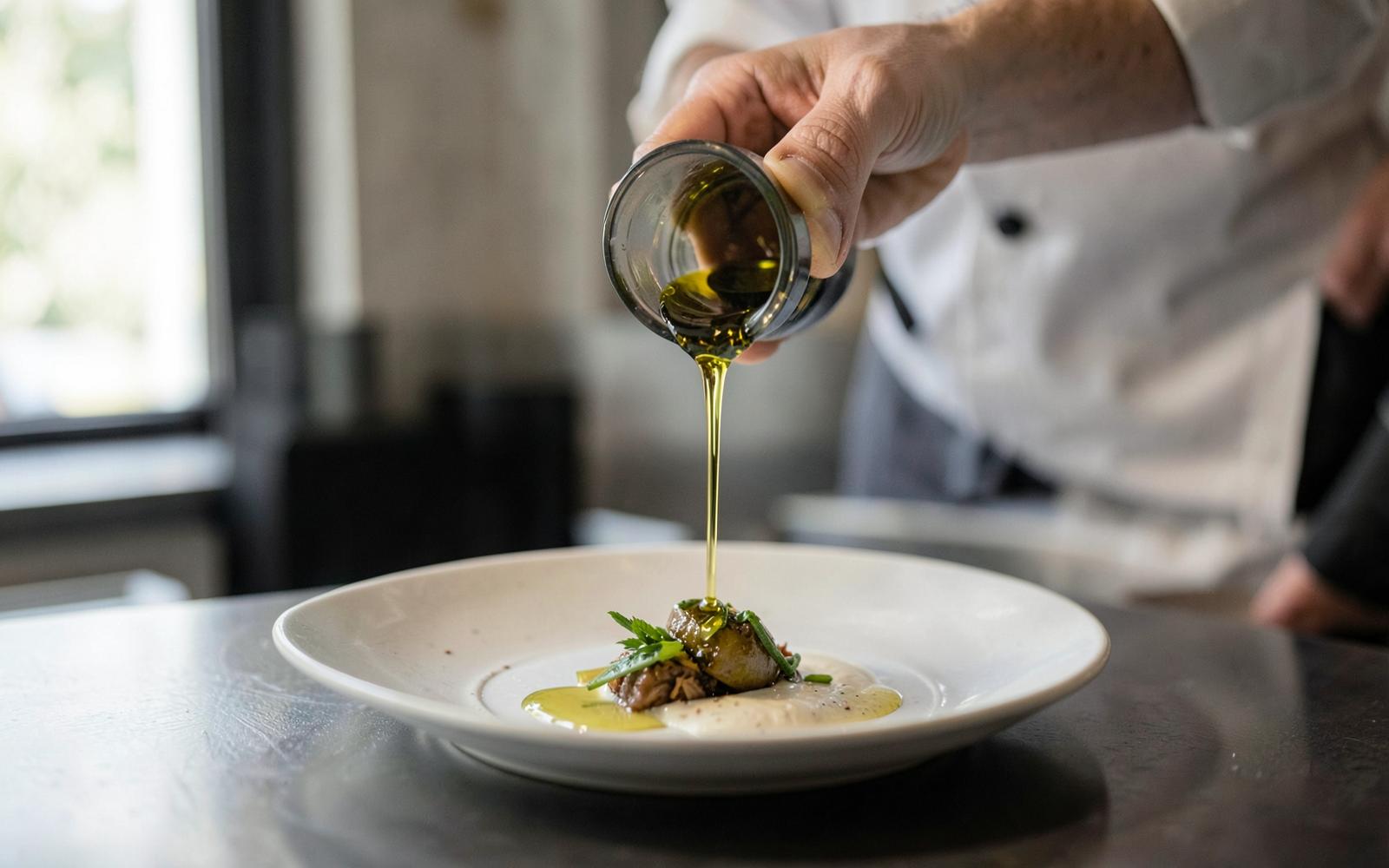
There is a version of provenance that is theatre: a menu listing twelve farms, none of which the kitchen has visited. And there is a version that has quietly become the most important development in fine dining — sourcing so specific that it determines what can be cooked at all.
The clearest example is olive oil. Serious kitchens now buy single-estate, single-harvest oil in the way they buy wine: by producer, by year, by grove, with a tasting before the order. Several of the restaurants we visited pour three different oils across a menu, chosen by intensity, and one has an oil list at the table.
Fish has moved the same way. Not merely day-boat but named-boat, with the kitchen buying from three or four skippers it knows and building the menu around what came in. The consequence is a menu that cannot be printed in advance, which is precisely the point.
The same logic has reached the unglamorous ingredients, and that is where the difference is most audible. Butter from one dairy, cultured to the kitchen's specification. Flour from a single mill, stone-ground, ordered in small quantities because it goes stale. Salt chosen for crystal size rather than origin story. These are the components a diner never reads about and always tastes.
Doing this properly is operationally punishing. Twenty relationships instead of two suppliers, deliveries at inconvenient hours, prices that move with the weather, and a kitchen that has to be capable of improvising at four in the afternoon. It only works with a small brigade and a chef who is present.
It also changes the wine and drinks pairing, which is why so many of these rooms have pushed into low-intervention producers and non-alcoholic pairings built from the same suppliers — verjus from the estate that grows the grapes, infusions from the herb grower who supplies the kitchen.
The honest counter-argument is that provenance can become a substitute for cooking. A perfect tomato requires nothing and proves nothing; the skill is in the dish that could not exist without it. The best kitchens are the ones where the sourcing disappears into technique rather than replacing it.
For diners trying to tell the difference, the test is conversational. Ask about one ingredient. A kitchen that is genuinely sourcing will answer with a name, a place and an opinion — and often a complaint about this year's harvest.
That last detail is the giveaway. People who really know their producers talk about them the way they talk about colleagues: warmly, specifically, and with the occasional grievance.