Homes
The Longevity House Arrives
Wellness infrastructure is now a deciding factor in prime property purchases — and a market heading toward $1.8 trillion is rewriting what a dream home contains.
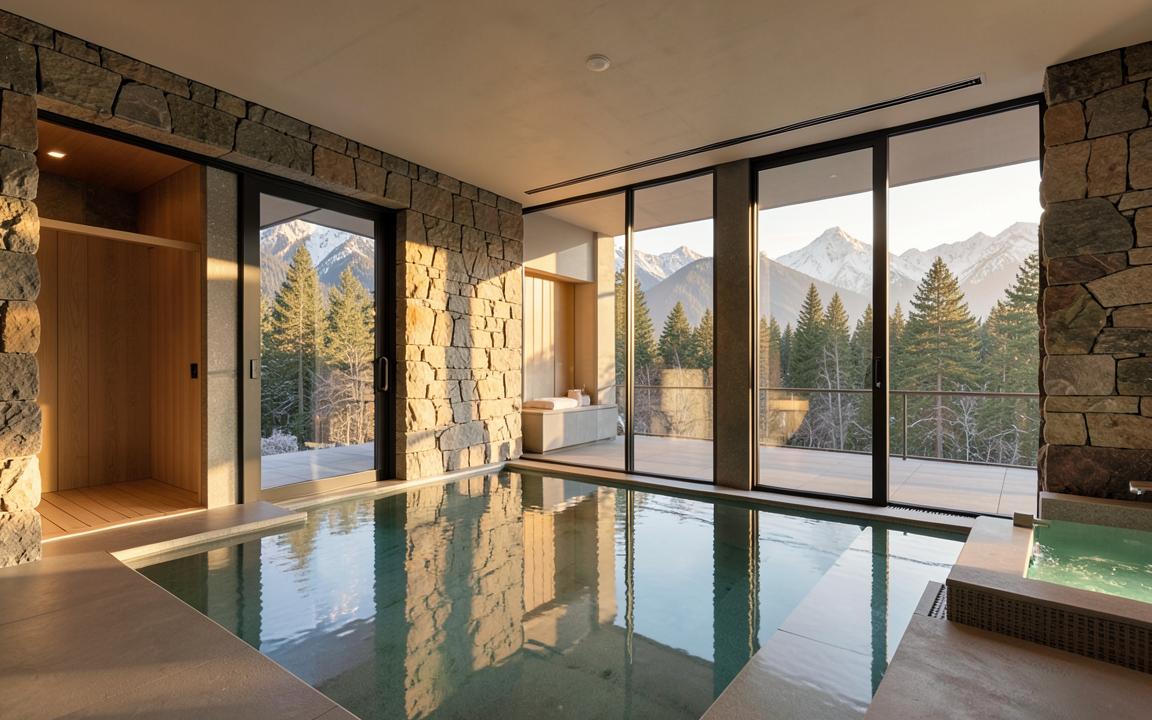
A generation ago, wellness at home meant a treadmill in the garage and perhaps a sauna nobody used. Today, the world's leading luxury brokerages report that health-centered design has become a genuine driver of purchase decisions at the top of the market — a shift Sotheby's International Realty's 2026 outlook names as one of the fundamental forces reshaping prime property.
The numbers are striking. Wellness real estate is projected to reach roughly $1.8 trillion globally by 2030, and the buyers behind it are not looking for amenities in the old sense. They are looking for infrastructure: circadian lighting, advanced air and water filtration, dedicated recovery suites, thermal circuits, and spaces designed with the same seriousness as a clinic and the discretion of a private club.
What changed is intent. The affluent buyer of 2026 increasingly treats the home as the one environment fully under their control — and asks it to actively support how long, and how well, they live. Developers at the top end have noticed, and the newest trophy residences are being specified around sleep quality, recovery and longevity rather than square footage alone.
The architectural consequences are visible. The home gym has become a performance suite; the bathroom, a hydrotherapy room; the garden, a designed microclimate. Architects describe clients arriving with blood panels and sleep data where previous generations arrived with tear sheets.
The most consequential work is the least visible. Mechanical ventilation with genuine filtration rather than a token filter. Water treated at the point of entry and again at the point of use. Lighting on a circadian schedule that dims to amber after dusk. Acoustic separation between sleeping and living floors. None of it photographs; all of it changes how a house feels at three in the morning.
There is a valuation question that the market has not fully answered. Kitchens and bathrooms have decades of comparable data behind them; a hyperbaric room does not. Early evidence suggests the durable premium attaches to the fabric of the building — air, water, light, acoustics — rather than to equipment that will look dated in five years.
Buyers should be sceptical in one specific direction: wellness has become a marketing vocabulary as much as a construction standard. The useful questions are technical and short. What is the air change rate? Is the filtration serviced under contract? Is the lighting actually programmed, or merely dimmable? A developer who can answer without checking has probably built it.
It is too early to say whether every feature will prove its worth. What is already clear is the direction of desire: the dream home of this decade is not just a place to live beautifully, but one engineered — quite deliberately — to help its owners live longer.