Design
Building for a Hundred Years
A quiet movement in architecture is designing houses to outlive their owners — with lime, stone, timber and almost no glue.
Ask an architect how long a contemporary luxury house is expected to last and the honest answers are uncomfortable. Sealed facades, composite panels and adhesive-bonded assemblies perform beautifully for twenty years and then become extremely expensive problems. A small but influential group of practices has decided to build differently.
The brief they work to is simple to state: a hundred years, repairable by a local trade, with no component that cannot be replaced without destroying another. Everything follows from that constraint, and the results look nothing like the glass boxes of the last cycle.
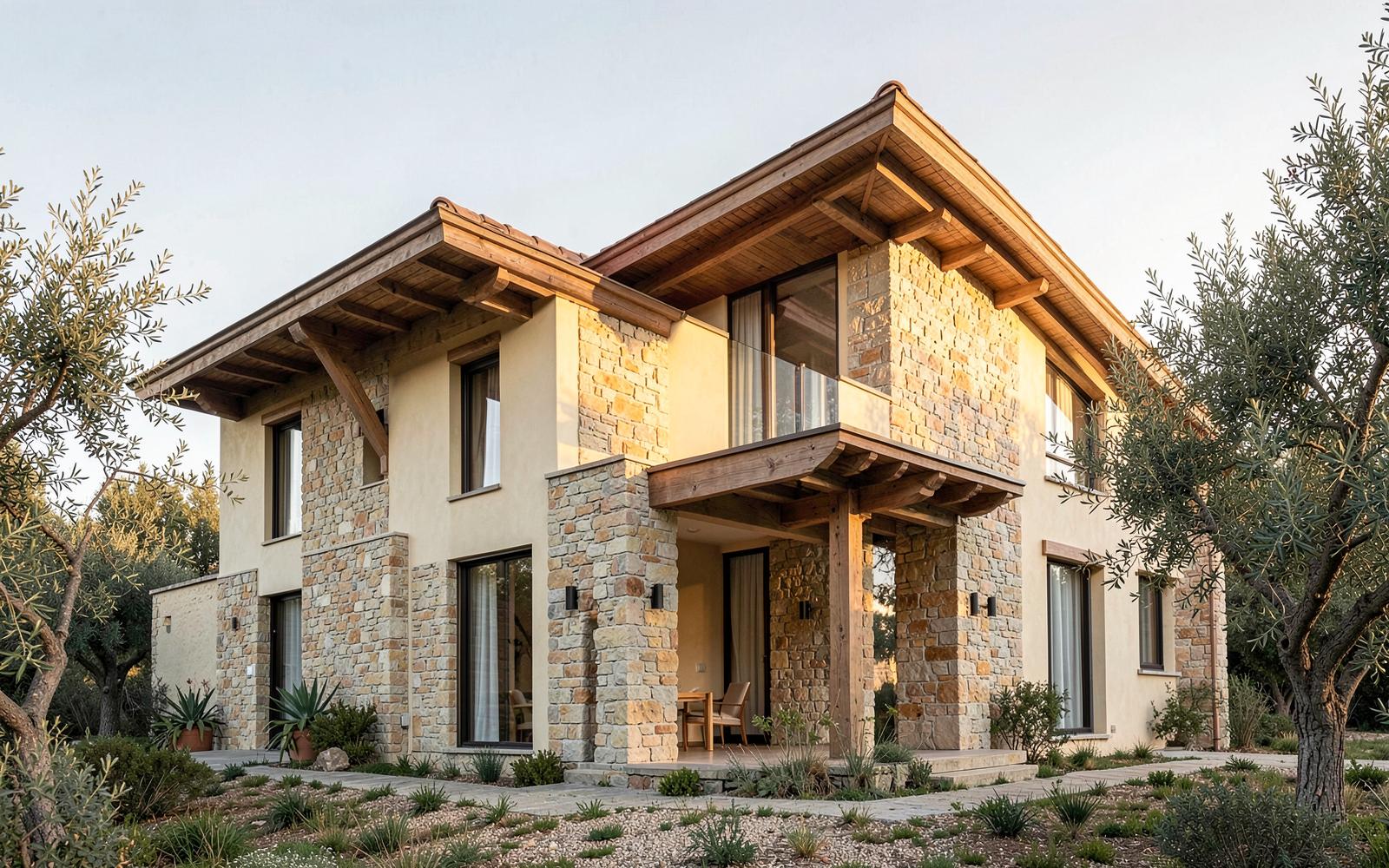
Materials come first. Load-bearing stone or brick rather than a decorative skin. Lime mortar and lime plaster, which move with a building and can be patched rather than replaced. Solid timber sections, joined mechanically where possible. Clay tile or slate roofs with a service life measured in generations, not warranties.
The second principle is separation of layers. The structure should last a century; the services perhaps thirty years; the finishes maybe fifteen. Building them so they can be untangled from one another — accessible conduits, replaceable plant, floors that lift — is what makes the long life practically achievable rather than theoretical.
Then comes climate design that does not depend on machinery. Deep eaves and shutters instead of tinted glass. Thermal mass to carry the house through a hot afternoon. Cross-ventilation designed with the prevailing wind rather than against it. Mechanical systems remain, but as support rather than life support.
The cost conversation is less alarming than owners expect. Construction budgets run perhaps ten to twenty per cent above a comparable contemporary build, concentrated in structure and envelope. The saving arrives later, in the twenty-five-year window where the conventional house needs its facade rebuilt and this one needs its lime repointed.
Aesthetically, the movement has a recognisable character: heavy walls, generous reveals, small controlled openings on the hot side and large ones on the shaded side, courtyards, and materials left to weather rather than sealed against it. It reads as calm because it is doing less.
There is a resale argument too, and it is becoming easier to make. Prime buyers increasingly ask about running costs, maintenance liabilities and insurability — three questions that a heavyweight, low-tech, repairable house answers unusually well.
The deepest change is one of attitude. A house designed for a hundred years is designed for people the owner will never meet, which imposes a discipline that fashion cannot. It is the least fashionable idea in architecture right now, and quite possibly the most durable one.