Style
Tailoring's Second Act Has Nothing to Do With the Office
Bespoke order books are full again — driven not by work but by people who simply want one thing that fits.
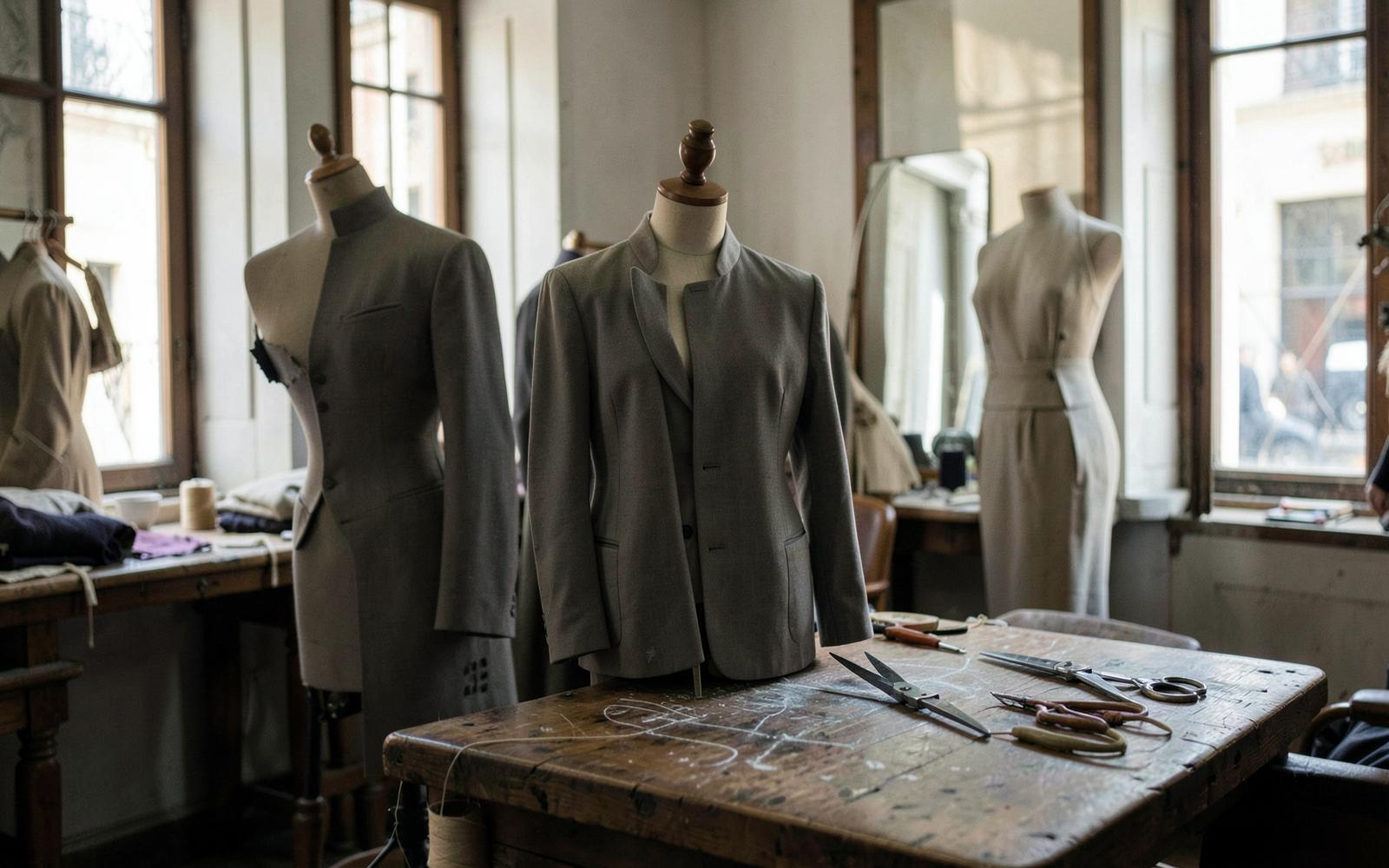
The obituaries for tailoring were written with some confidence, and they were wrong. Order books at the serious houses are full, waiting times have lengthened, and the average client is younger than at any point in the past two decades. What changed is the occasion.
Almost nobody is commissioning a suit to sit at a desk. They are commissioning for weddings, for dinners, for travel, for the specific pleasure of owning one garment that fits exactly. The suit has moved from uniform to object — which, oddly, is a far stronger commercial position.
The construction has followed the shift. Softer shoulders, lighter canvases, unlined summer jackets, trousers cut to be worn without a belt. The Neapolitan influence has won decisively, not because of fashion but because a jacket that can be worn on a plane is a jacket that gets worn.
Cloth is where the money now goes. Clients who once specified a mill by name are asking instead about weight, weave and behaviour: how it creases after eight hours, how it recovers overnight, whether it will survive a summer wedding outdoors. High-twist wools have become the default for anyone who has spent a July in a jacket.
The commissioning process is the other half of the appeal, and houses have learned to treat it as part of the product. Three fittings, several months, a conversation about how you actually live. In a market where almost everything can be bought instantly, a purchase that requires patience has become genuinely luxurious.
Costs are honest to state. Full bespoke at a respected house starts well into four figures and rises steeply; made-to-measure delivers perhaps eighty per cent of the result at half the price and is, for a first commission, usually the right answer. The difference is not glamour — it is the pattern cut for you and kept on file for the next twenty years.
A note on what to order first. Not the navy suit, which every wardrobe already approximates, but the odd jacket in a mid-grey or brown high-twist that can be worn with anything, or a genuinely well-cut pair of trousers, which is the most under-appreciated garment in menswear.
The women's side is where the growth is quietest and fastest. A small number of houses have built serious practices cutting for women rather than adapting men's blocks, and the waiting lists there are the longest of all.
What all of this signals is a broader correction. After a decade in which comfort was allowed to mean shapelessness, a generation has discovered that the most comfortable garment is the one cut precisely for the person wearing it. Tailoring's second act is not a revival of formality. It is a revival of fit.